 Doody
DoodyHow to track a child’s bowel movements
Track a child’s stools the same way clinicians do: date, Bristol type or plain description, pain or withholding if you see it, and diet changes such as starting solids or cow’s milk. A fortnight of notes helps a paediatrician more than a single scary nappy photo without context.

What parents usually need to capture
Frequency across the week, hard pellets versus soft mush, straining, stool withholding, blood, and mucus. For infants, colour changes your health visitor flagged also matter. Keep language boring and specific.
School-age kids may prefer a private profile on a parent phone rather than a shared family calendar chat.
Using Doody family profiles
Doody Pro lets you keep separate histories so your IBS log and your child’s constipation log do not blur together. Use Hard / Normal / Soft / Liquid / None with a short note (“withheld at school”, “pear juice started”).
Turn on biometric lock if other people borrow the phone. Bathroom data is still health data.
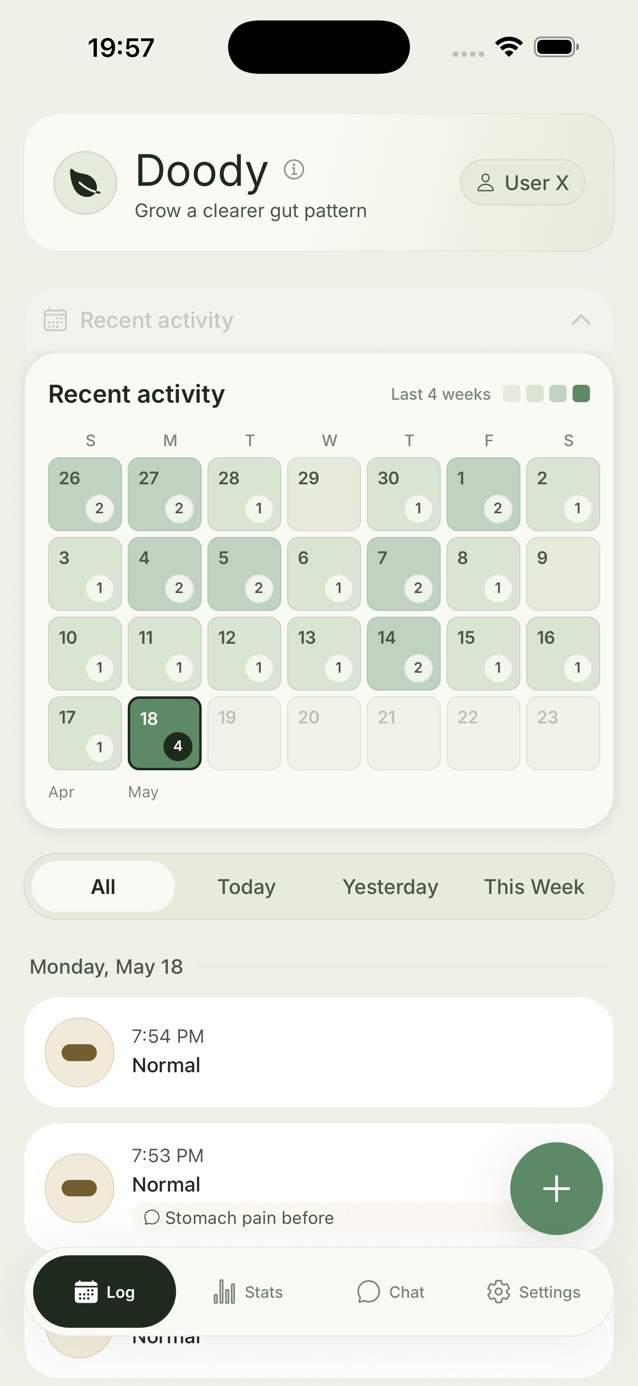
Log the next bowel movement in Doody
Free Bristol logging on iPhone. Upgrade later if you want Doody’s Read, full history, and CSV export.
Download on the App StoreWhen to seek care urgently
Black or bloody stools, pale stools in babies, severe pain, vomiting with constipation, or a child who stops passing stool for longer than your clinician advised are reasons to get medical help rather than more app logging.
The tracker supports routine monitoring and appointment prep. It does not triage emergencies.
FAQ
Is the adult Bristol scale OK for toddlers?
Paediatric teams still use stool form language similar to Bristol. If your clinician gave a different chart, follow that and map notes into Doody’s types as closely as you can.
Should I photograph every nappy?
Only if a clinician asked for it. Day-to-day, type plus a short note is enough and kinder on storage and privacy.